Why Ranthambore Is Famous For?
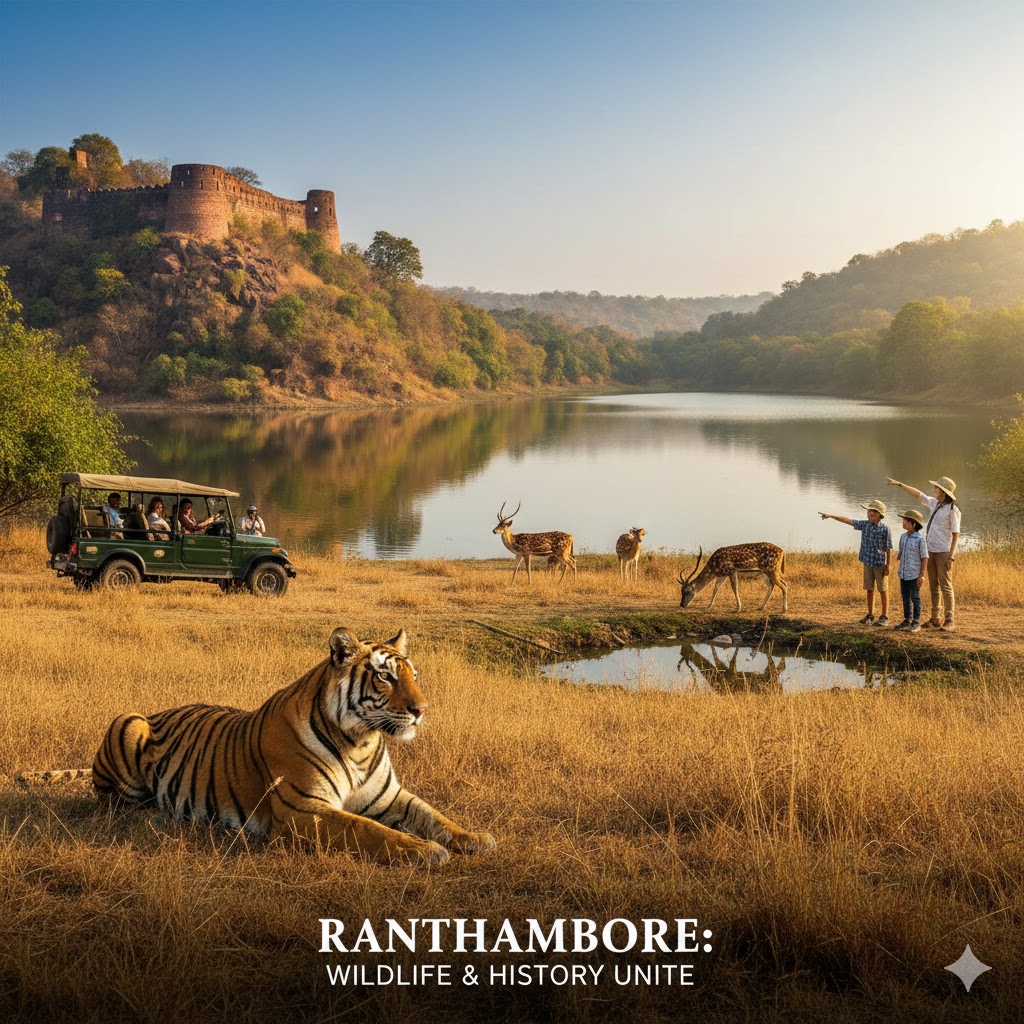
Ranthambore National Park is a popular travel destination for wildlife spotting in India. It is renowned for offering opportunities for visitors to view the Royal Bengal Tiger. The National Park is located in the Sawai Madhopur district of Rajasthan and attracts visitors globally. Aside from wildlife spotting, Ranthambore offers beautiful forest, large lakes, open grasslands, rocky hills, interesting historic buildings, and a combination of everything nature. Ranthambore is a unique travel destination to experience wildlife, adventure, and learn nature’s history. It is a fun and educational joint experience suitable for students, families, photographers, and novice safari visitors.
Famous for Royal Bengal Tigers
There are plenty of reasons to visit Ranthambore National Park , but the most popular reason is for the Royal Bengal Tigers. As one of the best locations in India to see wild tigers, Ranthambore is home to a good number of tigers in a clear and open forest. Unlike other parks, Ranthambore is home to open grasslands and forest clearings where tigers are likely to be seen walking, resting, and sleeping. Numerous tigers have been captured in photographs and are famous in the wildlife lover community. A tiger sighting at Ranthambore is a safari highlight and an unforgettable moment.
Unique Forest Landscape and Scenic Beauty
Ranthambore National Park is known for having a unique forest landscape that differs from vegetation-rich jungles like those in Kanha and Pench. The forests here are drier and have a mixture of open areas, rocky outcrops, and spacious bodies of water. This landscape provides Ranthambore with a strong and visually appealing atmosphere. The lakes in the park, mainly Padam Talao, Rajbagh Talao, and Malik Talao, are vital sources of water for the wildlife in the park and enhance the park’s beauty. During safaris, visitors often see and photograph animals near these lakes, making viewing wildlife easier and more exciting. The natural beauty and scenery of Ranthambore is best experienced during the winter mornings and sunset safaris.
In addition to tigers, Ranthambore boasts a plethora of other kinds of wildlife. Wild carnivores like spotted leopards, sloth bears, striped hyenas, jackals, and wild boars are also found in great number. Wild herbivores including deer of the species chital and sambar, as well as nilgai and chinkara, are often sighted in the open area. Among the primates of the park, the langurs are the most common and are often seen near the roads. Also, the park is a haven for those who observe birds, as over three hundred species of birds live in the area. Among the birds, there are peacocks, eagles, owls, vultures, kingfishers, and herons, as well as migratory birds that come to roost in the area. Also, there are a lot of crocodiles that are often seen sunbathing near the lakes.
Ranthambore Fort and Historical Importance
Ranthambore Fort is over 1,000 years old and is a UNESCO World Heritage site. It is one of the oldest sites and forts on the World Heritage list. It has had multiple uses throughout its history, including being the site of ancient administrative activities and defence. The fort has multiple points from which one can see a combination of the wildlife, vegetation, lakes, and multiple hills of the wildlife park, which is a WII. Animals found throughout the Ranthambore National Park can be viewed from the fort. The fort is one of very few structures of its type found within a wildlife park. It provides a historical education, which is a teaching opportunity for students, in addition to a natural one.
Safari Zones of Ranthambore National Park
To regulate tourism and conserve wildlife, Ranthambore divides its area into ten safari zones, numbered Zone 1 through Zone 10. Zones 1 through 5 are generally regarded as core zones, as they possess lakes, remarkable natural scenery, and offer frequent opportunities to see tigers. Zones 6 through 10 serve as buffer zones and are generally less trafficked, but still provide good opportunities to see other wildlife. The wildlife and vegetation of each zone vary with respect to the type of forest, topography, and wildlife movement. The forest department regulates and randomly assigns safari zone visits to help preserve each zone’s ecosystem.
Safari Gates and Entry Regulations
Ranthambore National Park is known for its unique safari gate entry system. The park has several safari entry gates, numbered 1 through 10, including Singhdwar Gate, Jogi Mahal Gate, and Balas Gate. Most of the gates are located near the city of Sawai Madhopur, which greatly facilitates entry for visitors. Each gated area is assigned to specific zones, and safari vehicles are permitted to enter through assigned gates only. This system has enabled the park to manage the level of traffic in the forest. Most importantly, it creates a balance and preserves the safety of visitors and the wildlife.
Safari Timings and Jungle Experience
In Ranthambore National Park, there are two safaris each day. One happens in the afternoon, while the other occurs in the morning, and their times change by season. Each safari lasts around three hours, and you do them in open canters or jeeps. Each of these open canters/jeeps has a driver, and a government forest guide, who talks to you about the forest, the animals, the birds, and the trees, and even about the animals’ and birds’ conservation, which is very educational for the fellow travellers who are students and families.
Best Time to Visit Ranthambore National Park
Ranthambore is open to tourists from October to June. The ideal season to visit is October to March because the weather is nice and cool. During this season, the forest is also green and beautiful, so the safari experience is comfortable. During the summer season of April to June, it is the best time to see the tigers because the tigers and other animals come to the lakes and waterholes to drink, so they are easier to find. The Park is closed for the rainy season from July to September because the forest roads are too dangerous to drive on.
Easy Connectivity and Tourist Facilities
Many wildlife parks are difficult to access, but Ranthambore National Park’s accessibility is a significant advantage. The closest city, Sawai Madhopur, is about 10 kilometres away and serves as a base for most visitors. It also has a major train station and has trains coming from and going to Delhi, Jaipur, and Mumbai (and other cities as well). The closest airport is 180 kilometres away in Jaipur. The city offers a good selection of hotels, and resorts, as well as restaurants, and safari booking offices. They also have taxis and tourist help centres. This is helpful for families, students, and foreign tourists.
Educational and Conservation Value
The importance of Ranthambore National Park is not limited to tourism, but also to wildlife conservation and education. The park is significant for the conservation efforts of tigers and other endangered species. When students visit Ranthambore, they learn about ecosystems, food chains, the behaviour of animals, and the conservation of forests. The park helps the visitors learn about the importance of conserving forests and wildlife to ensure a sustainable future.
Why Visitors Love Ranthambore
People appreciate Ranthambore National Park for its breathtaking views, exciting tiger sightings, and organised safari services. Everyone enjoys and learns something new from the mix of history and wildlife. The fort provides a view of history, and the open forest creates a thrill. It truly helps cultivate a sense of respect for the wild and helps create a lasting memory.
Conclusion
The mix of rich wildlife, open forest landscapes, the ancient Ranthambore Fort, and jungle safaris, all highlight Ranthambore's Royal Bengal Tigers. It also provides a superb wildlife experience and good travel connectivity. To put it plainly, Ranthambore National Park is celebrated because it combines wildlife, history, nature, education, and adventure. No doubt it is among the most cherished national parks in India.