Ranthambore National Park Tigress T-94 Death News
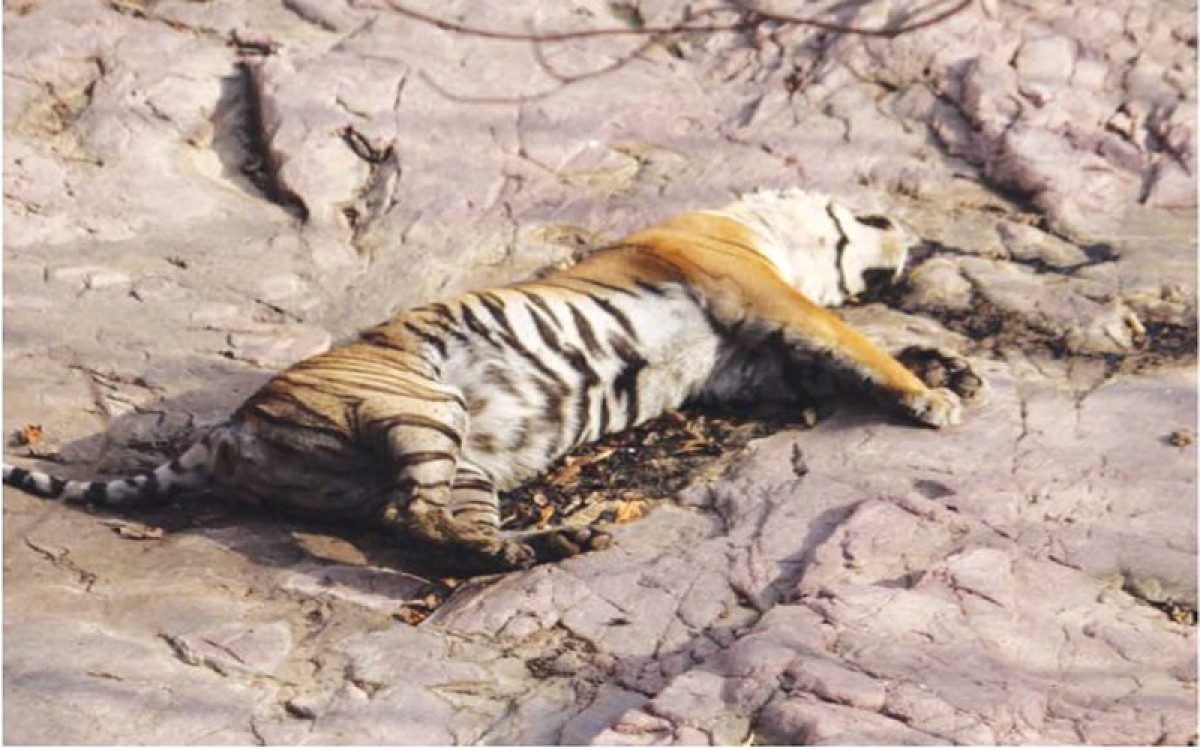
Bad news for wild animals has come from Ranthambore National Park in Sawai Madhopur, Rajasthan. The news of the death of Ranthambore Tigress T-94 spread like wildfire and shocked all wildlife lovers and tourists. Forest officials found the body of the tigress in the Ghoda Ghati region of the Khandar forest during their daily forest patrolling. Forest officials reported that the tigress was between 10 and 11 years of age and had a large territory in the forest. Her territory of movement included areas such as Indala, Vindhyakada, and Ondi Khoh. Forest officials reported that the tigress was an integral part of the tiger family in Ranthambore Forest. After spotting the body of the tigress, it was taken to a forest office for conducting a post-mortem examination by forest doctors. The examination was conducted in accordance with the rules of the National Tiger Conservation Authority, which takes care of tiger safety in India. The preliminary report suggested that the tigress did not have any injuries from hunters, which means her death was natural. However, experts are waiting for the final report to know the exact reason for her death.
Death News and What the Post-Mortem Found
The Ranthambore National Park Tigress T-94 death news also mentioned details about the post-mortem examination. In this regard, forest officers reported that all body parts of the tiger were found in a safe condition. This is a vital piece of information because it indicates that the tiger was not killed by anyone through a criminal act, like poisoning or by a hunter. The doctors took samples from the body of the tiger and sent them for examination in a veterinary laboratory. According to early reports, it seems that this tiger died because of a failure in its lungs or because of a blood infection known as "septicemia." As a result of this infection, different organs in the body, such as the heart, lungs, or kidneys, can be affected. As a result, the animal becomes weak and dies a natural death. In this regard, experts reported that this tiger was seen with a male tiger named T-96 a few days ago. Therefore, this tiger might give birth to tiger cubs in the near future. As a result, experts are concerned about how this tiger will be lost in Ranthambore in the near future. Even though tiger death is a natural phenomenon, every tiger is very important for conservation.
Why Wildlife Protection Matters
The Ranthambore National Park Tigress T-94 death news is a wake-up call to understand the importance of protecting wildlife. It is said that tigers are the apex predators of the forest. This means that tigers play a very important role in maintaining the forest's biodiversity. If the number of tigers decreases, the entire forest will be affected. Forest officers at Ranthambore work day and night to protect these animals from poachers and other threats. When a tiger dies, experts study the reason for the death so that they can improve the protection of wildlife in the future. Though the Ranthambore Tigress T-94's death news is unfortunate, Ranthambore is still one of the safest places for the wild tigers of India. If the tourists who visit Ranthambore for the purpose of the jungle safari follow the rules and regulations and protect the environment and the beautiful animals of the forest, they will be contributing to the protection of the forest and the animals.
Conclusion
The Ranthambore Tigress T-94's death news signals the end of a beautiful life in the wild. This tigress was a symbol of the strength of the Ranthambore tiger population. Though this news of her death is a shock for wildlife fans due to her death from organ failure, it is a part of nature’s cycle in the wilds. India has over 3,100 tigers at present, which is a tremendous success for animal protection programs. Ranthambore National Park will remain a prime location for nature lovers who want to see these majestic animals in their habitat.